Mildness and a Fairy Tale
Ken Finn
Chair
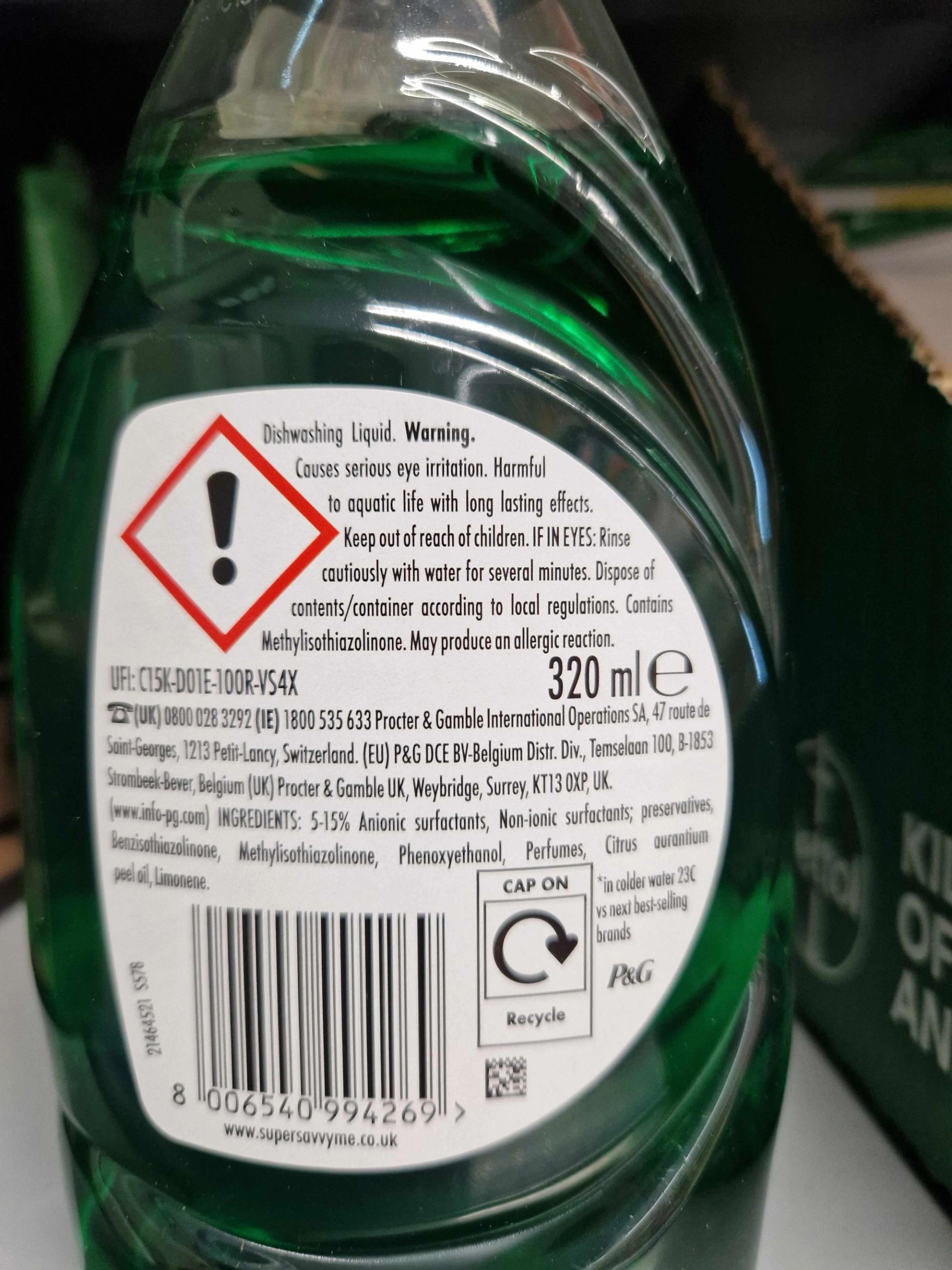
Britain's best-known washing-up liquid, a product promoted for generations for its mildness, carries a warning about its potential to cause long-lasting harm to aquatic life.
As part of our community listening project to help inform the development of a Charter for the River Tamar, I recently talked with William May Somerville, Chair of the Tamar and Tributaries Fishing Association. Our Charter project is being developed with the Environmental Law Foundation and international law firm Simmons & Simmons.
William raised an issue that many of us may never have considered: the chemicals we routinely wash down our household drains.
Speaking about the sheer quantity of household products we use, he observed: "What do we all do? We use it by the bucket load every day."
His comments prompted me to take a closer look at the cleaning products on our supermarket shelves. What I discovered was surprising.
Britain's best-known washing-up liquid, a product promoted for generations for its mildness, carries a warning about its potential to cause long-lasting harm to aquatic life.
And it isn't alone. Laundry detergents, household cleaners and other familiar products can carry similar warnings.
We read food labels. Why not cleaning products?
Many of us have become accustomed to checking the ingredients in our food. We seek out organic produce, avoid certain additives and choose products labelled 'free from'.
Yet how many of us turn over a bottle of washing-up liquid or laundry detergent to read its environmental warnings?
These warnings are there for a reason. They identify potential hazards to aquatic organisms, although they don't necessarily mean a product will cause environmental damage when used as directed.
Nevertheless, they should make us think.
From our sinks to the Tamar
Normally, wastewater from our homes passes through sewage treatment works, where many pollutants are removed or reduced.
But during periods of rainfall, combined sewer overflows can discharge untreated wastewater directly into our rivers.
And that wastewater contains more than sewage. It can include detergents, disinfectants, pharmaceuticals and a cocktail of other chemicals from our everyday lives.
Drip Drip's water testing has focused on bacterial pollution. We have not measured these chemical substances, so we cannot say what concentrations are reaching the Tamar or what harm they may be causing.
But William's observations raise important questions about the cumulative impact of everyday chemicals on an already stressed river ecosystem.
A small action we can all take
Protecting our rivers is the responsibility of water companies, regulators, manufacturers and government. But there is something simple we can do ourselves.
Next time you buy washing-up liquid, laundry detergent or a household cleaner, turn the bottle around and check the label.
Look for warnings about harm to aquatic life. Compare products. Question claims such as 'mild', 'natural' or 'eco-friendly', which don't necessarily tell us about their effects on rivers.
We have learned to think about what we put into our bodies. Perhaps it's time we thought more carefully about what we put down our drains.
As we work towards giving the Tamar a stronger voice through our River Charter, this seems a good place to start.
If we care about what goes into our river, let's start by checking what goes into our shopping baskets.
Drip Drip – Friends of the River Tamar